

Every time I get comfortable with one AI model, a new one shows up with a different name and the same promise: faster, smarter, better at running things on its own. If the AI release cycle feels like it stopped being a cycle and turned into a conveyor belt, you’re not imagining it. So where does it end?
I’m optimistic about the answer. But part of the story is a mirage, so let’s separate the real acceleration from the noise first.
How fast is the AI release cycle really moving?
A Fast Company analysis of release dates found that Anthropic went from a new frontier model every 46 days in the first half of 2026 to one every 26 days in the second half so far. OpenAI went the other way, from every 46 days to every 51.
So not every lab is speeding up. The same analysis also found that the gap between genuinely new flagship models hasn’t changed much this year for either company.
That’s the mirage. A lot of what feels like acceleration is point releases, cheaper variants, and tuned versions of existing models. Gartner analyst Arun Chandrasekaran told Fast Company that labs time releases to defend market share, lock in enterprise customers, and shape investor expectations. A new version number is partly a marketing event, and Fast Company notes that both OpenAI and Anthropic are working toward IPOs within the next year.
Version numbers speed up. Capability speeds up differently.
Here’s the cleaner way to think about it:
| What you notice | Actually accelerating? |
|---|---|
| Point releases and variants | Yes, but unevenly between labs |
| Brand-new flagship generations | Not much in 2026 |
| How long a task an agent can finish alone | Yes, and this is the real story |
| Compute poured into training | Yes, about 5x per year |
The third row is the one I care about.
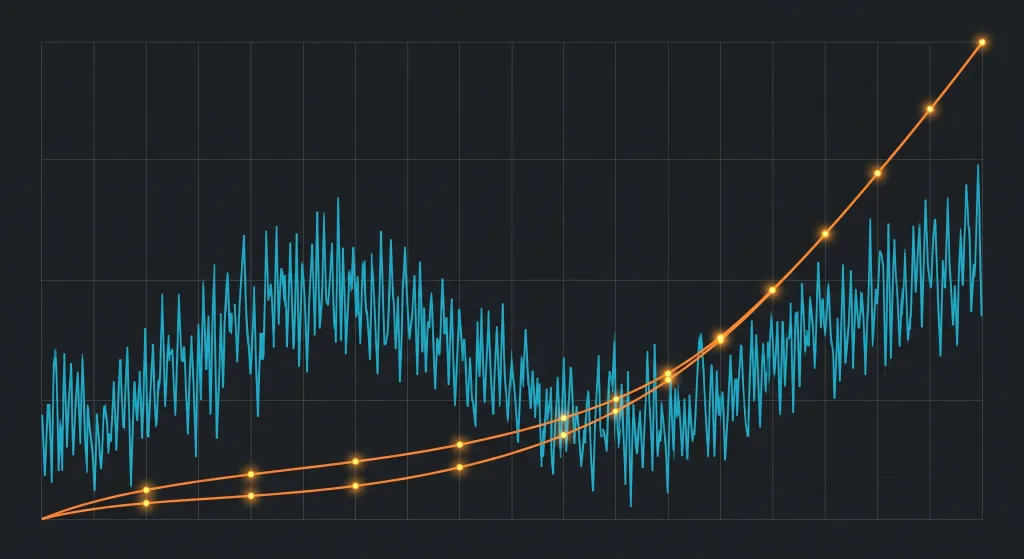
The number that matters: how long agents can work alone
The research group METR measures how long a task is (by how long a human professional needs) that an AI agent can finish with 50% reliability. In its original study, that length had been doubling roughly every seven months for six years.
Two caveats. First, 50% reliability is a coin flip, so this measures what agents can sometimes do, not what you’d trust them with unsupervised. Second, the seven-month figure dates from March 2025. METR has since published an update indicating progress sped up after 2023.
Even with the caveats, the shape is clear. Agents went from finishing tasks that take a human seconds to tasks that take hours. That, not the version number, is what changes your workday.
I’ve lived this shift myself. A year ago, I could trust AI with barely anything beyond minor, simple tasks. I reviewed every line of generated code, rewrote my instructions, and tried again, over and over. Now it understands the problem I’m trying to solve without much back and forth, and the code it gives me usually works. I still review it, but I’m no longer rescuing it.
Pro Tip: Stop tracking version names. Keep a short list of your own real tasks and re-test them whenever an update lands. If the results improve, adopt it. If not, ignore the launch hype.
Why the AI release cycle keeps shrinking
Epoch AI, which tracks this stuff, reports that training compute for frontier language models has grown about 5x per year since 2020, doubling every 5.2 months. The total computing power of AI chips is growing about 3.4x per year.
More compute is only half of it. Better models write the code, build the evaluations, and generate the data that train the next models. That’s my reading, not a measured statistic, but anyone who uses coding agents daily can see the loop forming.
The brake is cost. Epoch also finds that the cost of training frontier models has risen about 3.5x per year. That’s my best explanation for why flagship generations still take months while smaller updates ship every few weeks.
The end game: the version number disappears

Here’s my bet. It’s an opinion, not a forecast.
- Releases become continuous. Nobody tracks which version of Google Search they’re using, and your browser updates itself. Models will go the same way: the engine under your agent changes every week and you stop noticing.
- Agents become teammates instead of tools. Going from an hour of autonomous work to a full workday takes about three doublings. At METR’s original pace, that’s under two years.
- The bottleneck moves from capability to trust. The hard questions become permissions, review, and verification. Who checks the agent’s work, and how?
- The curve flattens somewhere. Compute, power, and money are finite. I don’t know where the S-curve bends, and anyone who claims to know is guessing.
I find this exciting because today’s pain is real. We’re all relearning our tools every few weeks. When the version number fades into the background, you get the benefit without the churn.
How to live with a faster AI release cycle
- Don’t migrate on launch day. Let someone else find the bugs.
- Keep your instructions in plain text so you can move them between tools.
- Pick tools that let you swap the model underneath.
- Treat agent output as a draft until it has earned your trust.
The release cycle will keep shrinking until it stops being something you notice. That’s the good outcome. Our job is making sure we can still check what the agents did when it happens.
Frequently Asked Questions
Is the AI release cycle actually getting faster?
Partly. Point releases are more frequent at some labs, notably Anthropic according to Fast Company’s analysis, but the time between genuinely new flagship models hasn’t changed much in 2026.
Will AI keep improving at this speed?
Probably for a while. Epoch AI measures frontier training compute growing about 5x per year, but training costs are climbing about 3.5x per year too, so the pace could bend. Nobody knows when.
What is METR’s time horizon?
It’s the length of a task, measured in human professional time, that an AI agent can complete at a given reliability, usually 50%. In METR’s original study it doubled about every seven months.
Should I upgrade to every new model?
No. Test the new version on your own real tasks first, and switch only if the results are better.