
Hey everyone, Eyad here.
You’ve seen the take: “AI is just a glorified search engine.” People say it like they’ve cracked the whole industry. So, is AI a search engine? No. But here’s what makes the argument worth having: a lot of us use it like one, and that’s the mistake.
Is AI a Search Engine? Not the Way You Think
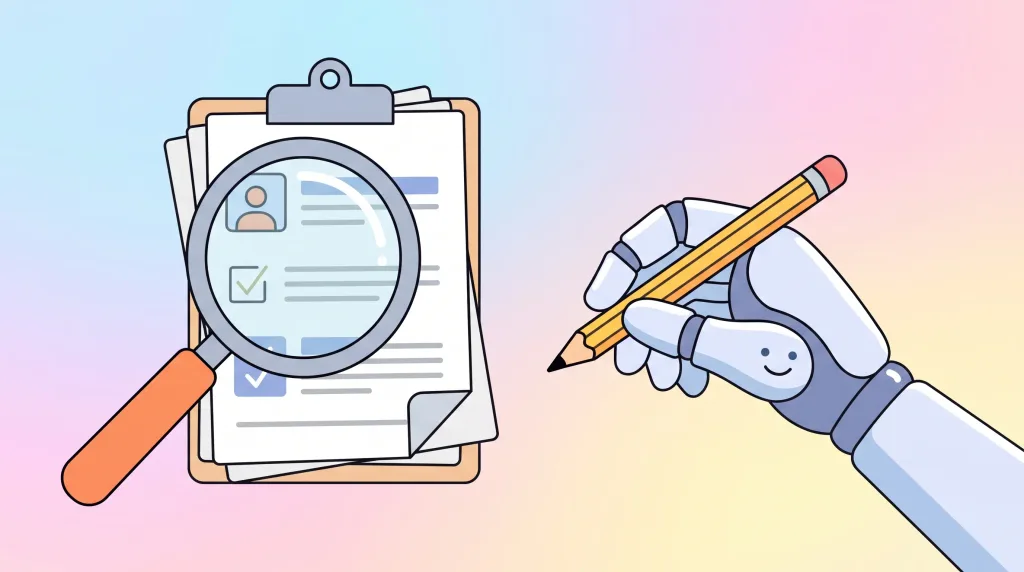
A search engine is a giant, fast index. You type some words, it finds pages that already exist, ranks them, and hands you a list. The answer lives on somebody else’s page, and you can see whose.
A language model (the technology behind ChatGPT, Claude, and Gemini) works differently. It was trained on enormous amounts of text to predict what comes next in a sentence. When you ask it something, it isn’t fetching a page. It’s writing a fresh answer from patterns it absorbed.
That’s why it can write a script for your exact spreadsheet problem or explain a contract clause in plain English, jobs no search engine can do. It’s also why it can invent a source that has never existed. Same mechanism, both results.
So it’s not a glorified search engine. It’s a different machine. I covered the big three in my 2026 AI models showdown if you want the tour.
Where the “Glorified Search Engine” Crowd Has a Point
Here’s the fair part. Most chatbots now ship with web search built in. Switch it on and the tool really does go out, read a few pages, and write you a summary.
So when people say “it’s just search,” they’re describing how it gets used. And this is where I’ll say something a lot of AI fans won’t like: as a search engine, it’s worse than Google at the one thing search is for.
Search shows you the sources and lets you judge them. AI hands you one finished paragraph that sounds like it knows what it’s talking about. You lose the moment where you’d have noticed the “source” is a random forum post.
The Numbers Aren’t Kind
Last October, 22 public broadcasters across 18 countries tested ChatGPT, Copilot, Gemini, and Perplexity. The BBC and European Broadcasting Union study had journalists review more than 3,000 answers to news questions in 14 languages. The results:
- 45% of answers had at least one significant problem
- Roughly a third had serious sourcing errors: missing, misleading, or wrong attribution
- About one in five had major accuracy issues, like outdated information
Fair caveats. These were news questions, the snapshot is from October 2025, and the researchers saw some improvement over an earlier round. It’s still the newest edition I could find.
Then there’s consistency. Researchers at Washington State University fed 719 hypotheses from business journal papers to ChatGPT, asked whether each was supported, and repeated every question ten times. Accuracy hit about 80%, but after you subtract lucky guesses on a true/false question, it was only about 60% better than chance. Identical prompts produced different answers, and some hypotheses flipped between true and false.
That study used the free versions (ChatGPT-3.5, then GPT-5 mini) and tested only ChatGPT. Paid models may do better. But ask a search engine the same question ten times and you’ll get much the same list of pages. That’s the difference.
The Sneakier Problem: It Can Make You Worse at Checking
An MIT Media Lab study followed 67 people for four weeks as they judged news headlines and images. With a chatbot’s help, they spotted fake news 21% more accurately. But by week four, their unassisted performance had dropped 15 percentage points below where they started.
It’s small, it’s US and UK only, and it used roughly 50 validated news items. One study settles nothing. But it fits what I’d expect: outsource the checking and the checking muscle shrinks.

Search vs AI: Which Should You Use?
| Job | Use | Why |
|---|---|---|
| Current facts: prices, dates, who holds a role | Search | Facts with an owner should come from the owner |
| Finding a specific page or document | Search | That’s what an index is built for |
| Verifying a claim | Search | Read the primary source yourself |
| Explaining a concept you don’t get | AI | It can rephrase until it clicks |
| Drafting or rewriting your own text | AI | You can judge the result |
| Writing or debugging code | AI | Then run it, because the tests tell the truth |
| Brainstorming and comparing options | AI | Wrong ideas cost you nothing |
Pro Tip: Ask the AI for its sources, then open them. If it can’t give links, or the links don’t say what it claimed, treat the answer as a rumor.
My Verdict: Think With AI, Check With Search
Use AI for the work of thinking and writing, where you can judge the output. Use search for the work of knowing, where a wrong answer costs you something. If a mistake would embarrass you, find the primary source.
Is AI a glorified search engine? The phrase insults both. Search engines are better at finding things, and AI does things a search engine never could. Just not the thing you keep asking it to do.
Frequently Asked Questions
Is ChatGPT a search engine?
Not by default. It generates answers from patterns it learned in training. With web search switched on, it also looks up pages and summarizes them, but the summary is still generated text, so check the sources.
Why does AI make things up?
It predicts plausible text rather than looking up verified facts. When it lacks the answer, it can still produce something fluent, and fluent is easy to mistake for true.
Can AI replace Google?
For explaining, drafting, and brainstorming, often yes. For current facts and finding original sources, not safely. The studies above suggest verification still matters.
How do I quickly check an AI answer?
Ask for the source, open it, and confirm it says what the AI claimed. For anything important, search the claim yourself and read the primary source.