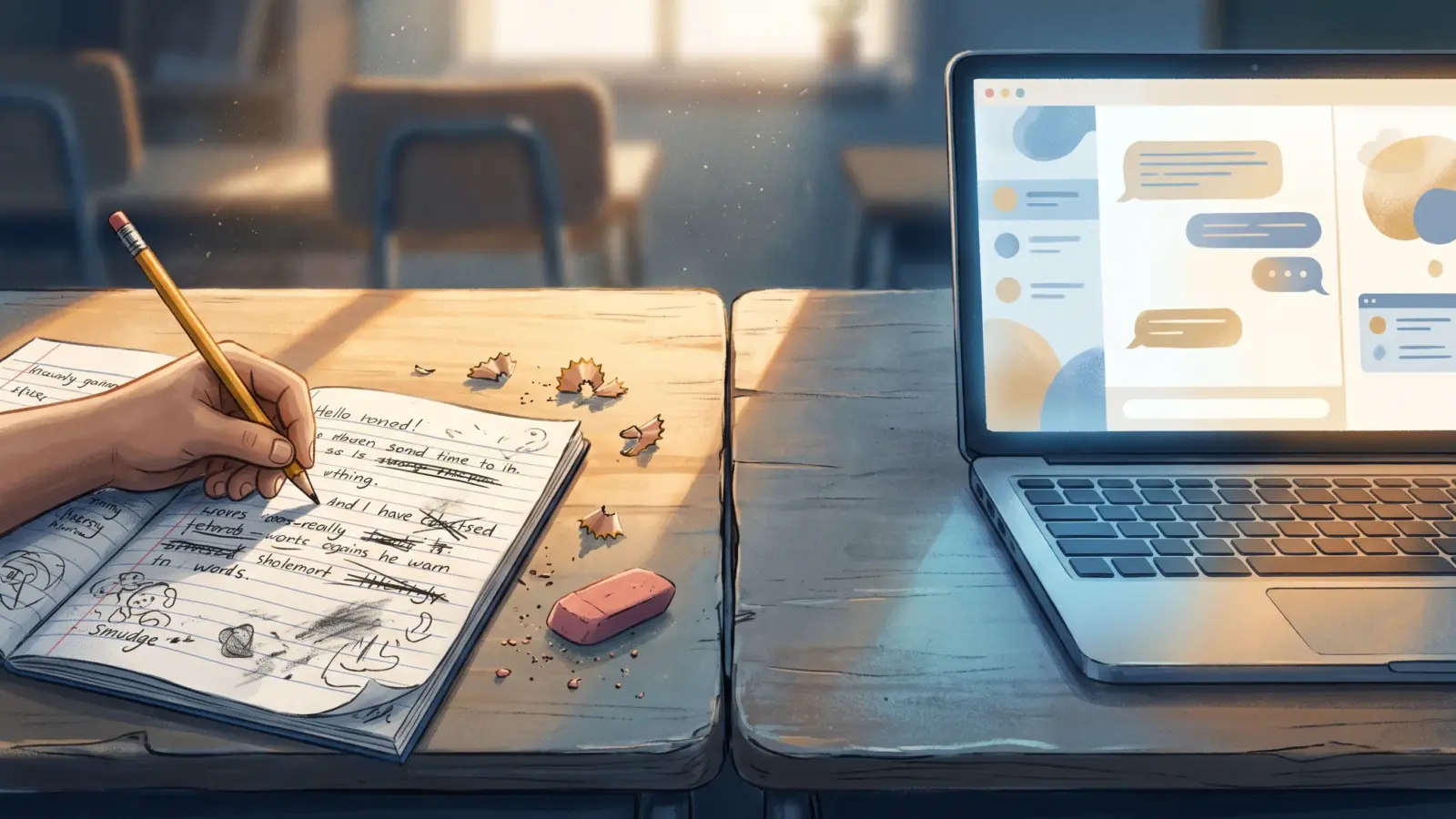

Is AI in schools a good thing or a bad thing? I started this post without an answer. A chatbot that explains fractions at 9 p.m. without losing its patience sounds like the private tutor most families can’t afford. It also sounds like a great way to stop kids from ever working anything out for themselves.
So I let the evidence decide. My take up front: right now, AI in schools is doing more harm than good, and the cause is how kids use it. When it coaches, it helps. When it does the work, it hurts. In the largest study so far, about four in five students who used AI were getting the second kind.
How Common Is AI in Schools Already?
Common enough that “should we allow it?” is the wrong question.
In September the OECD, the club of mostly rich countries that runs the biggest international school test, published PISA 2025. It covered more than 760,000 15-year-olds in 91 countries and economies. Across OECD countries, 46% of students said they use AI chatbots at least once a week to help them learn.
PISA only tests 15-year-olds, so it says nothing about primary school. It’s still the widest view we have.
The Advantages: A Patient Tutor for Every Child
The strongest evidence on the good side comes from Nigeria.
In mid-2024 the World Bank ran a six-week after-school English programme in Edo State, built around Microsoft Copilot. Students were assigned to it by lottery, which is the fairest way to test whether something works, and teachers supported the sessions.
The AI group finished well ahead. The researchers equate the gain to 1.5 to 2 years of ordinary schooling. The paper is from May 2025 and I couldn’t find a newer edition, so read it as proof that this can work, not a promise that it will.
What a well-used AI tutor offers a student:
- Explanations at their own pace, repeated as often as they need
- Practice pitched at their level, which is what “personalized learning” means
- Feedback in seconds instead of next week
- Help in a second language
Teachers benefit too. The OECD’s latest teacher survey found that 37% of lower secondary teachers used AI in their job in 2024.
The Disadvantages: Better Homework, Worse Exams
Now the bad news, and there’s more of it.
A study of 26,811 students in China, in grades 7 to 12, tracked them for 30 months as AI tools spread. Here’s what changed once a student started using AI:
| Measure | Change |
|---|---|
| Homework scores | Up 18% |
| Time spent on homework | Down 30% |
| Monthly closed-book exam scores | Down 20% within six months |
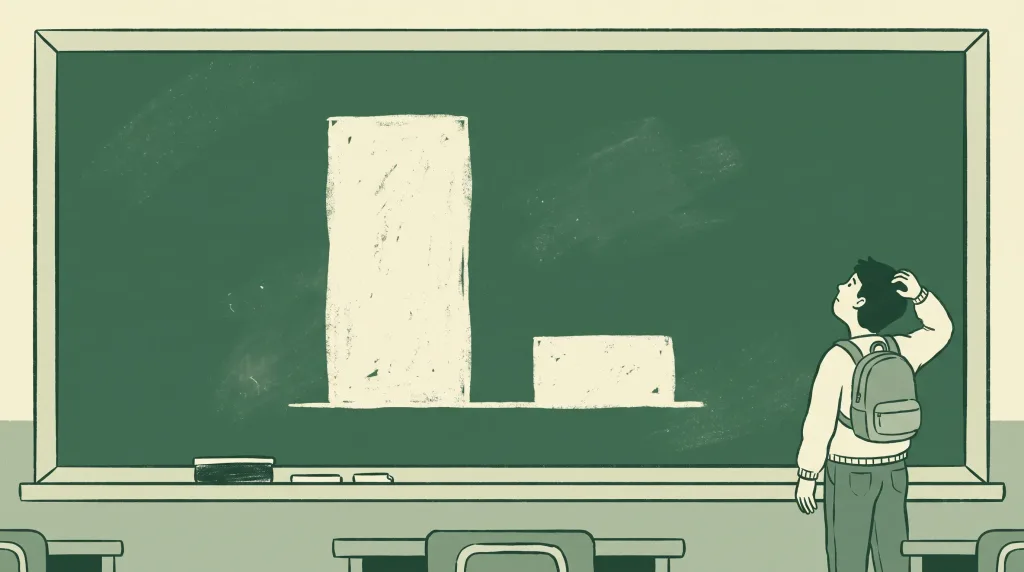
Homework got faster and better while learning got worse. Entrance-exam results fell too, and the full damage took about two years to show.
Some limits. This is a discussion paper, meaning it hasn’t been through peer review yet. It covers China only, and it wasn’t a lottery. The researchers compared students who took up AI at different times.
PISA points the same way. Students who used AI for specific school tasks, such as summarising texts, drafting, or research, scored lower in science than students who didn’t. News coverage of the release put the gap at about 20 points, roughly a year of schooling.
That one is a correlation. Weaker students may simply lean on AI more. Still, two very different data sets agree.
Does AI Make Kids Less Curious?
This was my own worry, so I looked for a study that measured curiosity directly. I didn’t find a finished one. A trial with 8th-graders in Czechia and Slovakia is testing exactly this, but I couldn’t find published results. For now, researchers count exam scores and effort, because interest is harder to count.
What exists is indirect. In the China study, about 80% of AI users showed the pattern of handing homework over: very short completion times with high marks. The other users, who kept spending about as long on homework as before, lost very little.
So the data show skipped effort. Nobody has shown that kids lose interest. I’d still protect curiosity, because PISA lists it among the attitudes most closely linked to higher science scores.
I use AI tools every working day, and I’ve lived the grown-up version of this. My team inherited a library written in Go, a programming language none of us knew, after its author left the company. We used AI to fix bugs and add minor features.
It took attempt after attempt. Most of us weren’t comfortable reviewing Go code the AI had written, so about the only check left was whether the tests covered every case we could think of. In the end we rewrote the whole thing in TypeScript, which we all knew, to stop the chaos.
A student using a chatbot on a subject they haven’t learned is in the same spot: the work gets handed in and nobody can vouch for it. And students don’t get a rewrite.
AI in Schools at a Glance
| When it helps | When it hurts | |
|---|---|---|
| The AI’s job | Tutor that asks questions and gives hints | Machine that produces the finished answer |
| Who does the thinking | The student | The chatbot |
| Adult in the loop | A teacher or parent | Nobody |
| Evidence | Nigeria trial: big gains in six weeks | China study: exam scores down 20% |
| What you see at home | Homework takes about as long as before | Homework is suddenly fast and perfect |
PISA found one group of AI users who scored slightly higher: students who use it regularly for general purposes and whose schools teach AI skills. Those lessons were more common among better-off students, so a new gap is opening.
What I’d Do
- Parents: watch the clock. Homework that suddenly takes far less time and comes back perfect matches the outsourcing pattern.
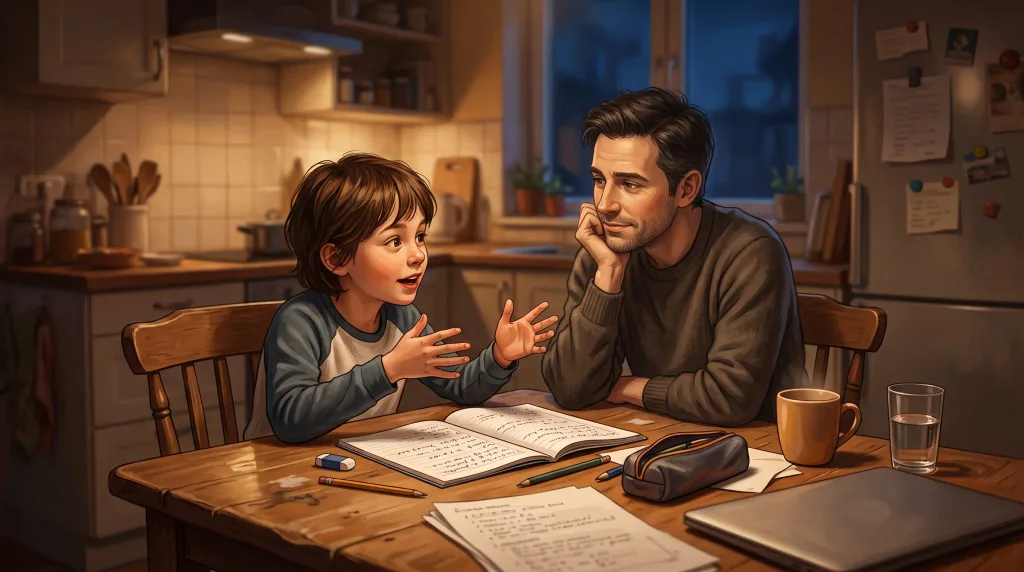
- Parents: attempt first, AI second. Afterwards, ask your child to explain the answer with the screen closed.
- Students: ask for hints and for your mistakes, never for the finished answer.
- Schools: grade more work done in the classroom, and teach AI use as a skill.
Pro Tip: Start homework chats with this instruction: “Act as my tutor. Don’t give me the final answer. Ask me one question at a time and show me where my reasoning goes wrong.” You can save it permanently in a Gem or a Project, which I covered in my post on Gems, Projects, and GPTs.
The Verdict
I began undecided. I’m ending cautious.
In January, a Brookings Institution study spanning 50 countries concluded that, for now, the risks of generative AI in children’s education overshadow the benefits. After reading the numbers, I agree. One of its recommendations fits in three words: “teach, not tell.”
A chatbot that teaches is the best thing to happen to a struggling student in a long time. A chatbot that tells is a homework machine, and in the best data we have, that’s how four in five students used it.
Frequently Asked Questions
Is AI in schools good or bad for learning?
Both, depending on use. A guided AI tutoring programme in Nigeria produced large gains. A 26,811-student study in China found exam scores fell 20% after students started using AI for homework.
Does AI make students less curious?
Nobody has measured that well yet. The research shows students skipping effort, with about 80% of AI users in the China study showing signs of outsourcing homework.
Should schools ban AI?
I don’t think so. A ban doesn’t reach homework done at home, and PISA found slightly higher scores among regular AI users whose schools taught AI skills.
How can my child use AI without hurting their learning?
Have them try the problem first, then ask the chatbot for hints and corrections. Check by asking them to explain the answer without the screen.