
Confession first: my daily browser is Chromium-based. So when I complain about one engine taking over the web, I’m part of the number I’m complaining about.
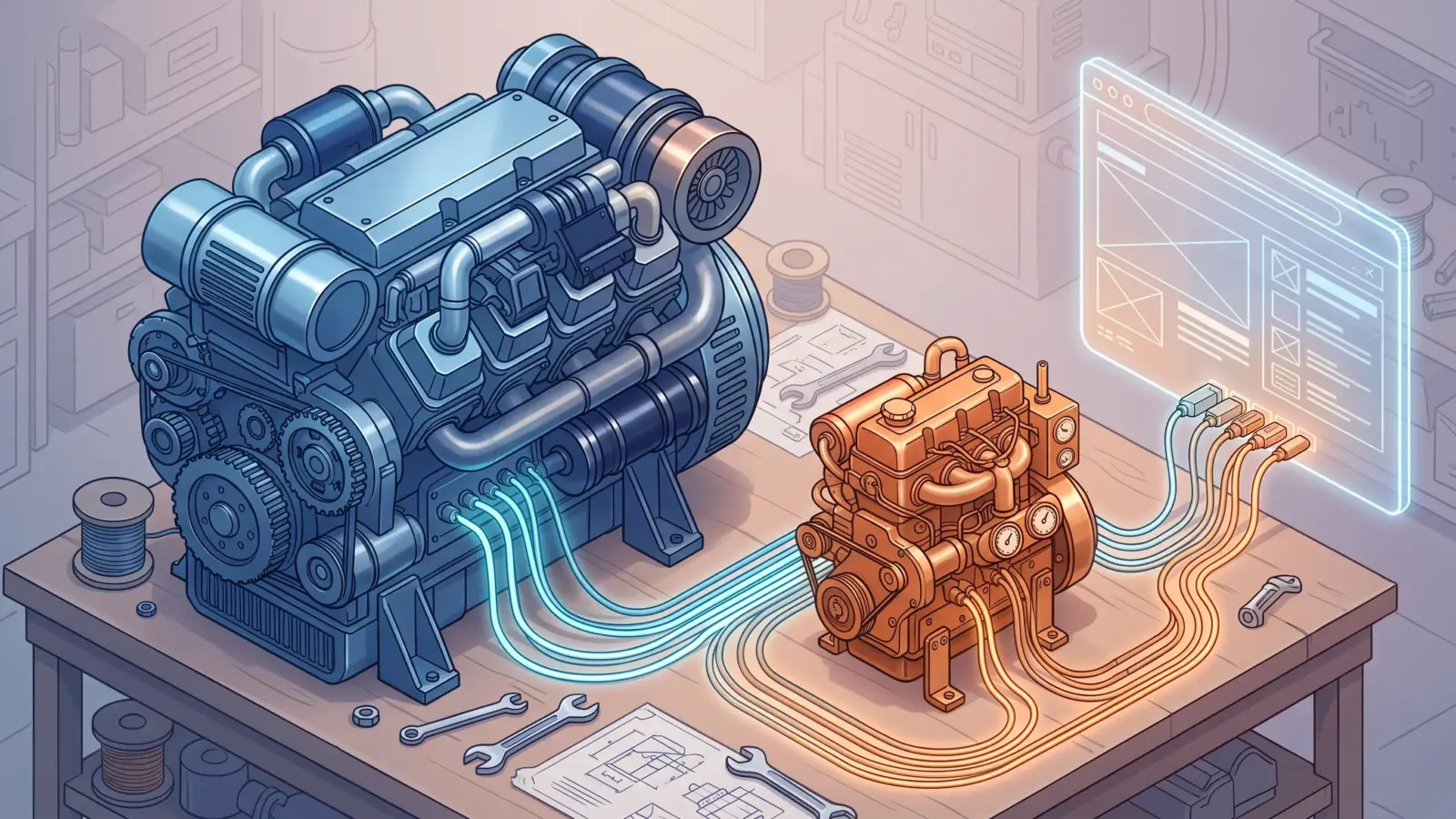
Chromium vs Firefox sounds like a browser comparison, and I already did one of those in my privacy browsers roundup. This post is about what sits underneath: Blink and V8 on one side, Gecko and SpiderMonkey on the other.
My take up front: Chromium is the better-funded engine and the more convenient one. The web still needs Gecko alive, and Gecko’s future is shakier than most people realize.
What a Browser Engine Does
A browser is two things: the window you see, with tabs and bookmarks, and the engine underneath. The engine has two parts:
- The rendering engine turns a page’s HTML and CSS into the pixels on your screen. Chromium’s is Blink. Firefox’s is Gecko.
- The JavaScript engine runs the code that makes a page interactive. Chromium’s is V8. Firefox’s is SpiderMonkey.
Both JavaScript engines use the same trick: run code in a simple, slower mode first, then recompile the parts that run most often into fast machine code. That’s JIT, short for just-in-time compilation. V8 calls its two ends Ignition and TurboFan. SpiderMonkey’s are the Baseline Interpreter and WarpMonkey.
| Chromium | Firefox | |
|---|---|---|
| Rendering engine | Blink | Gecko |
| JavaScript engine | V8 | SpiderMonkey |
| Run by | Mozilla, a company owned by a nonprofit | |
| Family tree | Split off from Apple’s WebKit in 2013 | Started at Netscape in the 1990s |
| Browsers built on it | Chrome, Edge, Brave, Opera, Vivaldi, Samsung Internet | Firefox, Zen, Floorp, Mullvad Browser |
Look at the family tree row. Blink came out of the engine inside Apple’s Safari, so Gecko is the only one of the big three with a separate bloodline.
Chromium vs Firefox in Numbers
StatCounter’s figures for September 2026 put Chrome at 66.4% of browsing across all devices worldwide, Safari at 18.3%, Edge at 6.0%, and Firefox at 2.8%.
Chrome, Edge, Samsung Internet, and Opera all run on Chromium. Together they hold about 76%, before counting Brave and Vivaldi.
So my headline needs a correction: this isn’t a two-engine race. Safari’s WebKit holds about 18%, but only on Apple devices.
The real picture is one giant, one engine tied to a single hardware maker, and one small independent. Firefox is the only mainstream non-Chromium browser you can install on Windows, Linux, and Android.

We’ve Seen a One-Engine Web Before
In the early 2000s, Internet Explorer had more than 90% of the market. Microsoft released IE6 in 2001 and didn’t ship IE7 until 2006. With no competitor there was no reason to hurry, and sites were built for IE’s quirks instead of the shared rulebook. It took Firefox, launched in 2004, to get things moving.
Since then the exits have all gone one way. Opera dropped its own engine in 2013, and Microsoft relaunched Edge on Chromium in 2020.
Why One Engine Is a Problem
Web standards are the shared rules for how web pages should behave. With several engines, a feature has to be agreed on before it becomes part of the web. With one engine, the standard is whatever that engine does.
- A second engine catches the first one’s mistakes. Interop is a yearly project where browser makers work to behave the same way. Mozilla’s write-up of the 2026 round describes building Anchor Positioning, a CSS feature for pinning one element to another, and finding that some shared tests contradicted the written rules. That usually happens when tests get written to match one browser’s behavior. Mozilla filed the issues, and both got fixed.
- One company’s “no” becomes everyone’s “no.” Google dropped JPEG XL, a newer image format, from Chrome in 2022, citing low interest, and the format stalled. It came back in Chrome 145 this February, switched off by default at launch, after Safari had shipped it and Mozilla had warmed to it.
- Chromium forks inherit Google’s decisions. Chromium is open source, so Brave or Edge can change anything. But whatever Google removes, a fork has to re-add and maintain with every new version. Manifest V3, Google’s rewrite of the extension rules, is the best example. I covered it in my Manifest V3 ad blocking post.
To be fair, the web isn’t broken today. The same Mozilla post reports that the combined Interop score, which tracks tests passing in every major browser, went from 25 to 95 during 2025. Chrome and Firefox each finished on 99.
I read that as a point for my side. Browsers agree this closely because several engine teams have to agree. Mozilla’s post calls Gecko “the only engine that isn’t owned by billionaires,” and that outsider keeps the other two honest.
Second confession: as a web developer, I always test on Chromium browsers. I only test on Firefox if someone reports an issue. Multiply that by most developers and you get a web built for one engine.
The Awkward Part: Google Funds Both Engines
Google builds Chromium. Google also pays Mozilla to be Firefox’s default search engine, and that money funds most of Gecko.

Mozilla’s finance chief told a US court in May 2025 that Firefox brings in about 90% of Mozilla’s revenue, and about 85% of that comes from the Google deal. I couldn’t find a newer figure.
The court let the payments continue, but the US Justice Department is appealing to have them banned. In August, Mozilla told the appeals court a ban could force it to “exit the browser and browser engine markets.” Mozilla has argued since the trial that losing the money would threaten both Firefox and Gecko.
So the main independent engine lives on its biggest rival’s cheques, and a case meant to rein in Google could end up killing it.
Is anyone else coming? Ladybird, a nonprofit project, is writing an engine from scratch with no search money. Its site still lists a first alpha, an early test version, for 2026, so it isn’t a daily browser yet.
What You Can Do
You don’t have to quit Chrome or Brave. Market share gives an engine its voice, so even a little use counts.
- Install Firefox as your second browser and give it a real job every week. Forks like Zen or Floorp count, because they’re still Gecko.
- If you build websites, test in Firefox and Safari before you ship, and report browser bugs instead of working around them. Yes, that includes me.
- Don’t confuse the browser with the engine. Switching from Chrome to Edge or Brave changes who collects your data. It adds no diversity.
Pro Tip: Give Firefox one whole category of your life, like banking or everything you read. It keeps those logins away from your main browser, which helps with the tracking I wrote about here.
The Verdict
On engineering budget and convenience, Chromium wins. I won’t pretend otherwise while using it every day.
On who decides what the web is, I want more than one answer. The last one-engine era gave us five stalled years. Today’s version is open source and far better run, but three quarters of browsing still sits behind one company’s decisions.
Keep Firefox installed and use it sometimes. It’s cheap insurance.
Frequently Asked Questions
What’s the difference between Chromium and Chrome?
Chromium is the open-source project that contains Blink and V8. Chrome is Google’s browser built from it, with Google’s services added.
Is Brave or Edge a different engine from Chrome?
No. They change features, privacy defaults, and the interface, but pages are still drawn by Blink and scripts still run on V8.
Is Firefox shutting down?
No, and nobody has announced that. The risk is financial: most of Firefox’s revenue comes from Google’s search payments, and a US appeals court is deciding whether those can continue.